
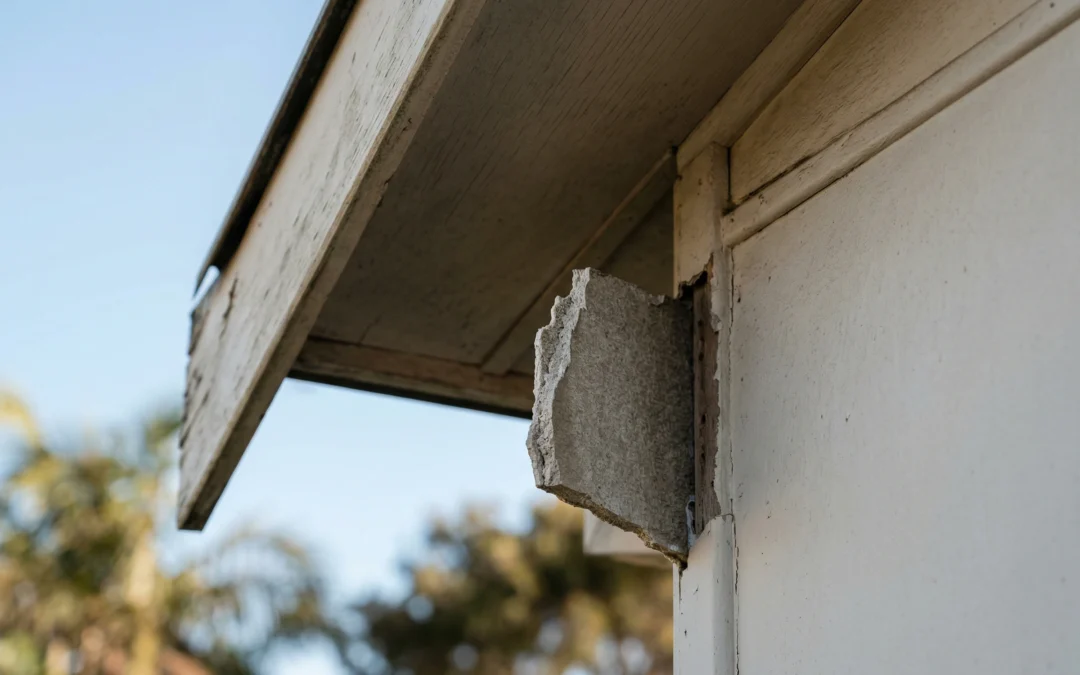
Southern Sydney has one of the highest concentrations of fibro homes in the country. Suburbs across St George, Sutherland Shire, and the Inner South are full of houses built between the 1940s and 1980s using fibre cement sheeting. At the time, it was a cheap and popular building material. Today, it is one of the most common sources of asbestos found in residential properties.
If you own a fibro home in this part of Sydney, asbestos is not a “maybe.” It is almost a certainty. Understanding where it is, what condition it is in, and when it becomes a problem is the difference between a safe renovation and a dangerous one.
What Is a Fibro Home?
Fibro is the Australian shorthand for fibre cement sheeting. From the 1940s through to the mid-1980s, manufacturers mixed cement with asbestos fibres to create flat and corrugated sheets used for walls, ceilings, eaves, roofing, and fencing. The result was a lightweight, fire-resistant, and affordable building material that was used in hundreds of thousands of homes across NSW.
The brand name most associated with this product is James Hardie, which produced asbestos-containing fibre cement under names like “Fibrolite” and “Hardiflex” until the mid-1980s. James Hardie stopped using asbestos in its products by 1987, and asbestos was fully banned in Australia in 2003.
If your home was built before 1990, there is a strong chance that some or all of the fibro sheeting contains asbestos. Homes built after 1990 generally used asbestos-free fibre cement, but this is not guaranteed. The only way to know for certain is testing.
Where Is Asbestos Found in a Typical Fibro Home?
Asbestos can be hiding in more places than most homeowners expect. In a typical Southern Sydney fibro home, the most common locations include:
External Wall Cladding
This is the most visible and widespread location. The flat or textured sheets on the outside of a fibro home are very likely to contain asbestos if the home was built before the late 1980s.
Internal Wall and Ceiling Linings
Many fibro homes used the same material on interior surfaces. Walls between rooms, hallway linings, and ceilings are common locations.
Eaves and Soffits
The underside of the roof overhang (the eaves) is often lined with flat asbestos cement sheets. These are frequently overlooked during inspections.
Roofing
Corrugated asbestos cement roofing (sometimes called “Super Six”) was widely used in NSW. It weathers over time and becomes brittle, which makes it a higher priority for removal.
Flooring
Vinyl floor tiles and the backing material beneath sheet vinyl can contain asbestos. This is common in kitchens, bathrooms, and laundries in older homes.
Fencing
Fibro fences between properties are extremely common in Southern Sydney suburbs like Hurstville, Kogarah, Rockdale, and Bexley North. These fences deteriorate over time and often become damaged, creating a potential exposure risk.
Other Locations
Asbestos has also been found in electrical meter boards, behind bathroom tiles (in the waterproofing layer), around hot water pipes, and in garden sheds built with fibro sheets.
When Does Asbestos in a Fibro Home Become Dangerous?
Asbestos in good condition is generally considered low risk. The fibres are bound inside the cement matrix and are not released into the air unless the material is disturbed.
The risk increases when asbestos-containing material is:
Broken, cracked, or damaged. Being drilled, cut, sanded, or scraped. Weathered to the point where the surface is chalky or flaking. Exposed to water damage, storms, or impact. Being removed without proper safety controls.
This is why renovations are the most common trigger for asbestos exposure in residential settings. A homeowner or tradesperson who drills into an asbestos wall, sands an asbestos floor, or breaks apart an asbestos fence without knowing what it is can release fibres into the air.
Those fibres are invisible. You cannot see, smell, or taste them. And once inhaled, they can cause serious disease years or decades later.
The Southern Sydney Context
Southern Sydney has a higher density of fibro homes than most other parts of the metro area. Much of the housing stock in suburbs like Hurstville, Peakhurst, Mortdale, Penshurst, Kogarah, and Rockdale was built in the post-war construction boom using fibro sheeting. Sutherland Shire suburbs like Miranda, Caringbah, and Cronulla have a similar story.
Many of these homes are now 50 to 80 years old. They are being renovated, extended, or knocked down at a steady rate as the area grows and densifies. This means asbestos is being encountered on building sites across the region every week.
The problem is that many homeowners do not know their home contains asbestos until a builder or demolition contractor discovers it mid-project. At that point, work stops, costs go up, and timelines blow out.
What to Do If You Own a Fibro Home
Step 1: Assume Asbestos Is Present
If your fibro home was built before 1990, treat every sheet of fibro as if it contains asbestos until proven otherwise. Do not drill, cut, sand, or remove any material without testing it first.
Step 2: Get an Asbestos Survey
Hire a licensed asbestos assessor to inspect your property. They will take samples from suspected materials and send them to a NATA-accredited laboratory for testing. The results will tell you exactly where asbestos is, what type it is (bonded or friable), and what condition it is in.
This survey creates an asbestos register for your property, which is a requirement under NSW regulations if your property has been identified as containing asbestos.
Step 3: Assess the Condition
Not all asbestos needs to be removed immediately. If the material is in good condition, undamaged, and will not be disturbed, it can often be left in place and managed with regular inspections.
However, if you are planning any renovation, extension, or demolition work, the asbestos will almost certainly need to be removed first. This is a legal requirement in NSW, not a suggestion.
Step 4: Hire a Licensed Removal Company
In NSW, any removal of more than 10 square metres of bonded asbestos requires a Class B asbestos removal licence. Friable asbestos removal requires a Class A licence regardless of the quantity. Always check that your contractor holds the correct licence and has current public liability and workers compensation insurance.
A licensed asbestos removal team will handle containment, safe removal, transport to an EPA-approved disposal facility, and issue a clearance certificate when the job is done.
Step 5: Keep Records
Keep your asbestos survey, removal certificates, and disposal receipts. These documents are valuable when selling your property, applying for building approvals, or demonstrating compliance with regulations.
Common Mistakes Fibro Home Owners Make
Assuming new-looking material is safe. Asbestos fibre cement can be painted over, tiled over, or covered with render. Just because it looks updated does not mean the underlying material is asbestos-free.
Letting a handyman or unlicensed worker remove it. This is illegal in NSW for quantities over 10 square metres and dangerous at any quantity. Unlicensed removal puts everyone on site and nearby at risk.
Ignoring damaged material. A cracked fibro fence or a piece of broken eave lining sitting in the yard is an exposure risk. Even small amounts of damaged asbestos should be professionally assessed.
Not testing before renovating. This is the most expensive mistake. If asbestos is discovered after demolition or renovation work has started, the site must be decontaminated and all contaminated waste handled as asbestos. This can cost far more than testing and planned removal would have.
Protecting Your Family and Your Investment
Owning a fibro home in Southern Sydney is not a problem in itself. Thousands of families live safely in fibro homes every day. The key is knowing what you have, keeping it in good condition, and getting professional help before you disturb it.
If you are planning a renovation, thinking about selling, or just want to know what your home contains, contact us for an obligation-free inspection. We have been helping Southern Sydney homeowners manage asbestos safely for over 15 years, and we will give you a clear, honest assessment of your property.