
Most homeowners focus on one question: “How do I get asbestos out of my house?” That makes sense. It is the immediate problem. But very few people ask the follow-up question: “Where does it actually go?”
The answer matters more than you might think. Asbestos does not disappear when it leaves your property. It enters a regulated disposal chain that involves licensed transport, EPA tracking, and burial at approved facilities. And if any step in that chain is skipped or done incorrectly, you as the property owner can be held responsible.
Understanding the disposal process also helps you tell the difference between a legitimate removal company and one that cuts corners. Because the disposal chain is where the shortcuts happen.
Step 1: Containment on Site
Before asbestos waste leaves your property, it must be properly contained. This happens during the removal process itself.
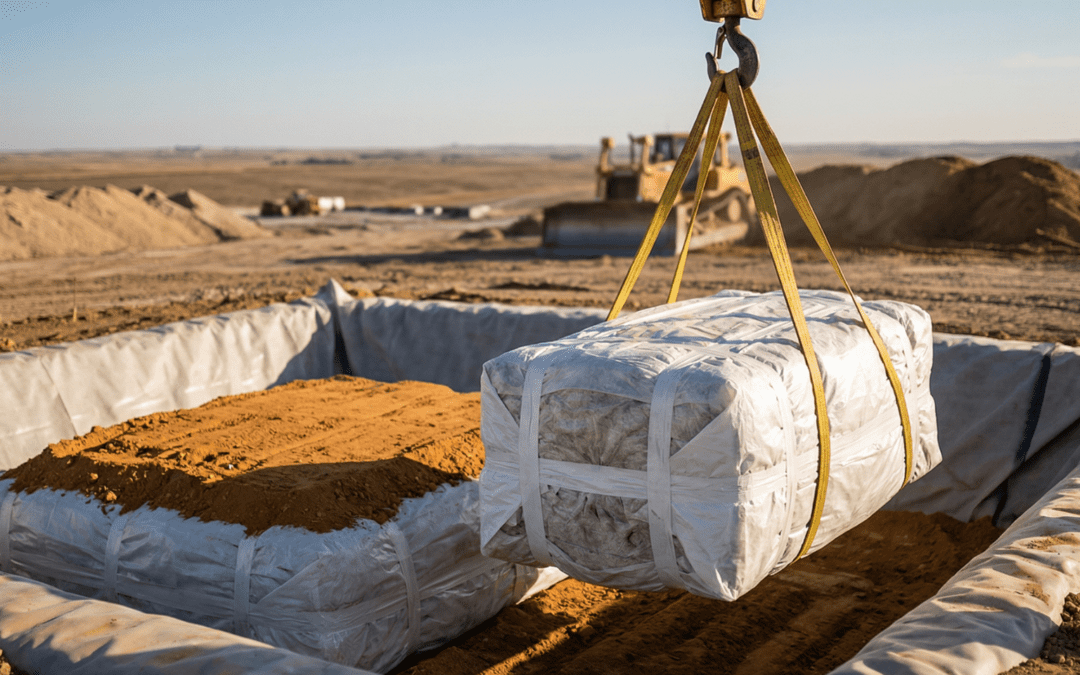
For bonded asbestos (the solid sheets found in walls, roofs, and fences), the standard method is to wet the material, remove it in whole pieces without breaking it, and double-wrap it in heavy-duty polyethylene sheeting at least 200 microns thick. Each bundle is then sealed with tape and clearly labelled with asbestos warning signs.
For friable asbestos (loose, crumbly material found in insulation and pipe lagging), the containment requirements are stricter. The material is placed in sealed, labelled containers or heavy-duty asbestos waste bags inside a controlled enclosure. The enclosure itself is decontaminated before it is dismantled.
The goal at this stage is to make sure no fibres are released during handling, stacking, or loading. A good removal crew will have a designated waste staging area on site, usually on plastic sheeting, where wrapped bundles are stacked before transport.
Step 2: Licensed Transport
Asbestos waste cannot be transported in a regular vehicle. In NSW, it must be carried by a licensed waste transporter who is authorised to handle asbestos. The vehicle must display asbestos warning signage, and the waste must be secured so it cannot shift, fall, or be damaged during transit.
The transporter is required to carry a waste transport certificate that tracks the origin of the waste (your property address), the quantity and type of asbestos, the destination facility, and the date of transport.
This paper trail exists so the EPA can verify that asbestos waste is going where it is supposed to go. If a transporter is caught dumping asbestos at an unlicensed site, the penalties are severe.
For most residential jobs in Southern Sydney, the transport distance to an approved facility is relatively short. But for larger commercial or industrial projects, transport logistics and costs can be a significant part of the budget.
Step 3: Disposal at an EPA-Licensed Facility
Asbestos waste in NSW can only be disposed of at facilities licensed by the EPA to accept it. These are not regular landfills. They are specially managed sites with specific handling procedures for asbestos.
When the waste arrives at the facility, it is weighed and inspected. The transporter presents the waste transport certificate, and the facility logs the delivery. The asbestos is then placed in a designated cell within the landfill, separate from general waste.
The burial process follows a strict protocol. Asbestos waste is placed in the cell, then immediately covered with a layer of clean fill (soil or other inert material) to prevent any fibre release. The cell is compacted and sealed. Over time, additional layers of fill and capping material are applied to permanently isolate the asbestos from the environment.
These facilities are monitored long-term for groundwater contamination, surface stability, and compliance with EPA conditions.
Bonded vs Friable Disposal
The disposal requirements differ depending on the type of asbestos.
Bonded asbestos waste (wrapped in plastic sheeting) is accepted at a wider range of licensed facilities and attracts lower disposal fees. It is considered lower risk because the fibres are locked in a solid matrix.
Friable asbestos waste must go to facilities specifically licensed to accept it, and the disposal fees are higher. The handling requirements at the facility are also more stringent, reflecting the greater risk of fibre release.
Step 4: Documentation and Compliance
At the end of the process, a legitimate asbestos removal company should provide you with several key documents.
Clearance Certificate: This confirms that the asbestos has been removed from your property and the site has been inspected and declared safe. For friable asbestos, this includes air monitoring results showing that airborne fibre levels are below the safe threshold.
Waste Transport Certificate: This documents the movement of asbestos waste from your property to the disposal facility. It includes the date, quantity, type of asbestos, and the name and licence number of the transporter.
Disposal Receipt (Tip Docket): This is issued by the receiving facility and confirms that your asbestos waste was delivered and accepted for disposal. It is your proof that the waste was disposed of legally.
Keep all of these documents. They are your evidence of compliance and can be requested by councils, insurers, or buyers if you sell the property later.
Where the System Breaks Down
The disposal chain works well when every step is followed. But it is also where illegal operators cut costs.
Illegal Dumping
Illegal dumping of asbestos waste is a persistent problem in NSW. It happens in bushland, on vacant blocks, in skip bins, on roadsides, and in household rubbish. The EPA has dedicated enforcement resources to track and prosecute illegal dumping, but it still occurs.
Why does it happen? Because disposal fees are a real cost. A removal operator who skips the licensed facility saves hundreds or thousands of dollars per job. That saving either goes into their pocket or gets passed on as a lower quote to win work.
If you receive a quote that seems too low, ask where the asbestos will be disposed of. Ask for the name and licence number of the disposal facility. If the contractor cannot or will not answer, that is a serious red flag.
Contamination of General Waste
Another common breach is mixing asbestos waste with general demolition or construction waste. This is illegal and dangerous. General waste goes to facilities that are not equipped to handle asbestos. Workers at those facilities, and anyone else who comes into contact with the mixed waste, can be exposed.
During a home demolition or commercial strip out, asbestos waste must be separated from all other waste streams on site. A reputable contractor will have separate skips or waste areas clearly marked for asbestos and non-asbestos material.
Backyard Burial
Some homeowners (and unfortunately, some unlicensed operators) bury asbestos waste on the property itself. This is illegal. It contaminates the soil, creates a long-term hazard, and can surface later when the property is excavated for new construction, landscaping, or pool installation.
Buried asbestos is one of the most expensive types of contamination to remediate because it often requires extensive soil excavation and offsite disposal.
What This Means for You as a Property Owner
Understanding the disposal chain is not just academic. It has practical consequences for your project and your legal exposure.
You can be held liable. Under NSW environmental legislation, the person who generates the waste (that is you, the property owner) can be held responsible if the waste is not disposed of properly. If your contractor dumps asbestos illegally, you may face enforcement action alongside them.
Your property’s value is affected. Proper disposal documentation supports the value of your property. If you sell a home where asbestos was removed, the buyer (or their solicitor) may ask for proof that the removal and disposal were done legally. Having those records gives confidence. Not having them raises questions.
Your project approvals may depend on it. Some council development consents require evidence of lawful asbestos disposal before they will sign off on the next stage of construction. If you cannot produce tip dockets and clearance certificates, your project can stall.
How to Protect Yourself
Before hiring an asbestos removal contractor, ask them three questions about disposal.
First, where will the waste be taken? They should name a specific EPA-licensed facility. Second, will you receive a copy of the waste transport certificate and tip docket? The answer should be yes. Third, is disposal included in the quote, or is it an additional charge? A transparent quote includes all disposal costs upfront.
If you want clear answers and full documentation from start to finish, contact our team for a no-obligation quote. We handle every step of the disposal chain in-house, and we provide all certificates and receipts as standard.
Related asbestos guides
How Much Does Asbestos Removal Cost in Sydney in 2026?
Bonded vs Friable Asbestos Explained
Asbestos in Fibro Homes: Southern Sydney Guide
The Real Cost of Ignoring Asbestos Before You Renovate
DIY Asbestos Removal in NSW: Why It’s Illegal
How to Read an Asbestos Report
Asbestos Air Monitoring Explained