
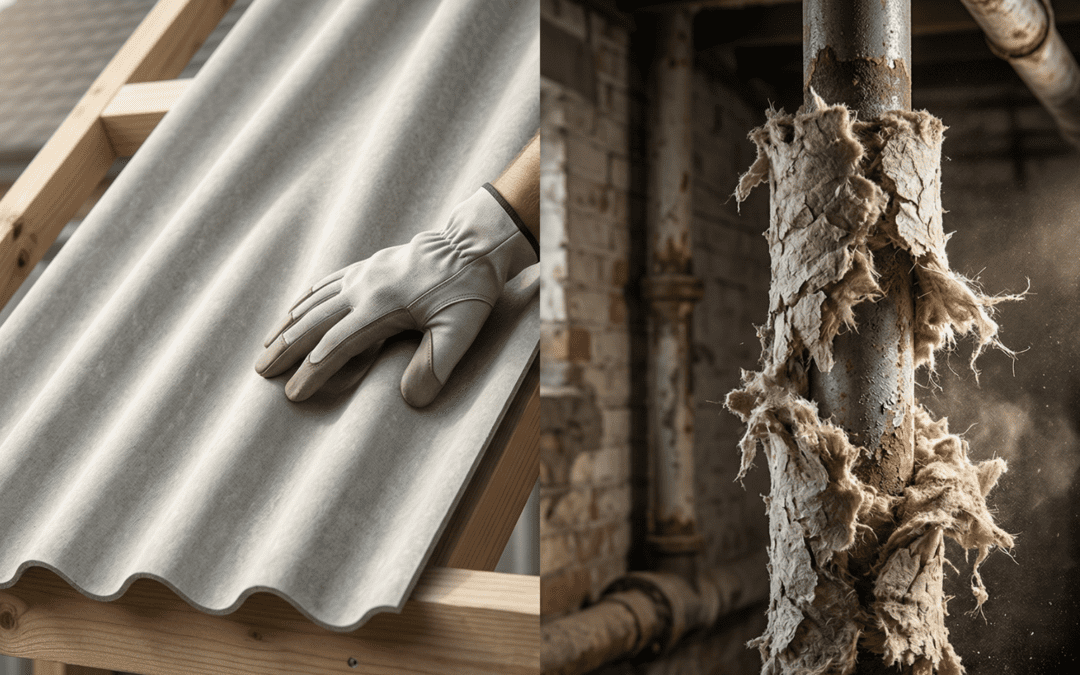
When most homeowners hear the word “asbestos,” they picture one thing. A dangerous material that needs to come out. But asbestos is not a single category. It comes in two very different forms, and the difference between them changes everything about how your removal project is planned, priced, and carried out.
The two forms are bonded asbestos (also called non-friable) and friable asbestos. One is relatively stable and manageable. The other is loose, unpredictable, and far more dangerous. Knowing which one you are dealing with is the first step in understanding your project timeline, your legal obligations, and your costs.
What Is Bonded Asbestos?
Bonded asbestos is the most common type found in Australian homes and commercial buildings. It is sometimes called non-friable asbestos because the asbestos fibres are locked inside a solid binding material, usually cement.
The most familiar example is fibre cement sheeting, the flat or corrugated panels used for walls, roofs, eaves, fencing, and ceilings in homes built between the 1940s and late 1980s. In these products, asbestos fibres make up roughly 10 to 15 percent of the material by weight, with the rest being Portland cement.
When bonded asbestos is in good condition, the fibres stay trapped in the cement matrix. You cannot see them. They do not float into the air on their own. The material looks and feels like a solid sheet of cement.
Where Bonded Asbestos Is Commonly Found
In a typical residential property, bonded asbestos appears in external wall cladding (fibro sheeting), corrugated roofing sheets (often called Super Six), flat eave and soffit linings, internal wall and ceiling linings, fencing between properties, vinyl floor tiles and sheet vinyl, bathroom and laundry wall linings, and electrical meter boards.
In commercial buildings, it also appears in fire doors, duct insulation panels, and cement pipe fittings.
When Bonded Asbestos Becomes a Problem
Bonded asbestos is low risk when it is in good condition and left alone. The danger starts when the material is damaged, deteriorated, or disturbed.
Drilling, sawing, sanding, or breaking bonded asbestos releases fibres from the cement. Weathering over decades can cause the surface to become chalky and friable, especially on roofs and fences exposed to sun, rain, and wind. Impact damage (a fallen tree branch, storm debris, a lawnmower strike on a fence) can crack sheets and expose fibres.
Once bonded asbestos is damaged or disturbed, it behaves more like friable asbestos at the break point, releasing fibres into the air.
What Is Friable Asbestos?
Friable asbestos is any material that contains asbestos and can be crumbled, pulverised, or reduced to powder by hand pressure when dry. The asbestos fibres are not locked inside a solid matrix. They are loosely held together or mixed with a soft binding material that breaks apart easily.
This makes friable asbestos far more dangerous than bonded asbestos. The fibres are readily released into the air with minimal disturbance, and even small amounts can produce significant airborne contamination.
Where Friable Asbestos Is Commonly Found
Friable asbestos is less common in residential properties but more common in older commercial and industrial buildings. Typical locations include pipe lagging and insulation around hot water systems and boilers, sprayed-on insulation (limpet asbestos) used for fireproofing and thermal insulation, loose-fill insulation in wall cavities and ceiling spaces, asbestos rope and gaskets in older heating systems, and backing material on some older vinyl flooring.
In residential properties, friable asbestos is most often found in older insulation around pipes, in deteriorated asbestos cement products (where weathering has made the surface crumbly), and in some backing materials hidden behind walls or under floors.
Why Friable Asbestos Is So Much More Dangerous
The risk from asbestos comes from inhaling airborne fibres. With bonded asbestos, you need to physically break or cut the material to release fibres. With friable asbestos, something as simple as air movement, vibration, or light contact can release them.
Friable asbestos fibres are extremely small. They stay airborne for hours and can travel well beyond the immediate work area. They settle on surfaces, clothing, and skin, and can be re-released into the air long after the initial disturbance.
This is why the regulatory requirements for friable asbestos removal are so much more stringent than for bonded asbestos.
How the Two Types Change Your Removal Plan
The distinction between bonded and friable asbestos is not just a technical detail. It affects every aspect of your removal project.
Licensing Requirements
In NSW, bonded asbestos removal over 10 square metres requires a contractor with a Class B asbestos removal licence. Friable asbestos removal of any quantity requires a contractor with a Class A licence. Class A licences have higher requirements for training, equipment, procedures, and oversight. Not all asbestos removal companies in Sydney hold both licences. If your property has friable asbestos, you need to confirm that your contractor is Class A licensed before any work begins.
Safety Procedures
Bonded asbestos removal follows a controlled process: wetting the material, carefully removing it without breaking it, double-wrapping in labelled heavy-duty plastic, and transporting it to a licensed disposal facility. Workers wear disposable coveralls, P2 respirators, and safety eyewear.
Friable asbestos removal is a completely different operation. It requires a full enclosure of the work area using sealed plastic sheeting, a negative air pressure unit that continuously pulls air through HEPA filters, continuous air monitoring by a licensed assessor during and after the work, personal decontamination for every worker leaving the enclosure, and an independent clearance inspection and air test before the enclosure is removed.
The work area is treated as a contamination zone. No one enters without full PPE and training. No one leaves without going through decontamination.
Cost Impact
The difference in cost between bonded and friable asbestos removal is significant. Friable removal typically costs two to three times more than bonded removal for the same volume of material. The additional costs come from the enclosure setup, air monitoring equipment and assessors, longer project timelines, higher disposal fees (friable asbestos is classified differently at the disposal facility), and the independent clearance inspection.
For homeowners planning a renovation or home demolition, discovering friable asbestos mid-project can blow the budget and timeline. This is one of the strongest arguments for getting an asbestos survey done before any work starts.
Disposal Differences
Both types of asbestos must be disposed of at an EPA-licensed facility. But friable asbestos has stricter packaging, labelling, and transport requirements. It must be placed in sealed, labelled containers (not just wrapped in plastic), and the transport vehicle must display asbestos warning signs. The receiving facility charges higher fees for friable waste.
How to Find Out What Type You Have
You cannot reliably tell the difference between bonded and friable asbestos just by looking at it. Some materials are obvious (a solid fibro sheet is clearly bonded; loose insulation around a pipe is clearly friable), but many are not. Weathered bonded asbestos can become friable at the surface. Vinyl flooring may have a friable backing hidden underneath. Wall cavities may contain loose-fill insulation that is not visible without inspection.
The only reliable method is to have a licensed asbestos assessor inspect and sample the material. They will assess both the type of asbestos (chrysotile, amosite, crocidolite) and its condition (bonded or friable). This information determines the removal method, licensing requirements, and cost.
Why This Matters for Your Project
If you are planning any work on a property built before 1990, the bonded-vs-friable question should be answered before you get removal quotes. A quote based on the assumption of bonded asbestos will be inaccurate if the assessor later finds friable material. And a contractor who only holds a Class B licence cannot legally touch friable asbestos.
Getting the assessment done first means your quotes are accurate, your contractor is correctly licensed, your project timeline accounts for the right removal method, and there are no surprises that stop work mid-project.
Whether you are renovating, stripping out a commercial space, or planning a full demolition, the type of asbestos on your property shapes the entire project. Knowing what you are dealing with upfront saves time, money, and risk.
If you need an asbestos assessment or want a clear quote for removal, reach out to our team. We hold both Class A and Class B licences and can handle whatever your property throws at us.