
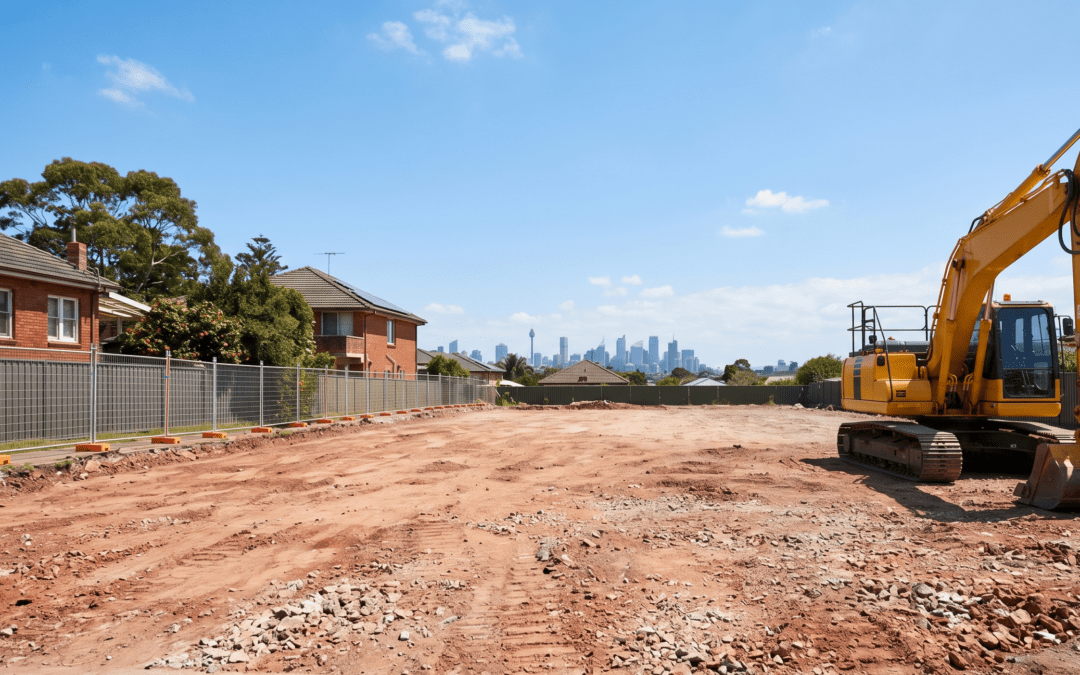
Demolishing a house sounds straightforward. Bring in the machines, knock it down, and clear the site. But the reality is more involved than that, and the cost reflects it.
House demolition in Sydney involves approvals, hazardous material removal, utility disconnections, structural dismantling, waste disposal, and site preparation. Each of these has a cost attached to it, and those costs vary depending on the size and construction of the house, the suburb, the site conditions, and what you plan to do with the land afterward.
If you are planning a knockdown rebuild or clearing a block for a new development, this guide will help you understand where your money goes and how to budget accurately.
The Variables That Drive Demolition Cost
No two demolition jobs cost the same. Here are the factors that have the biggest impact on pricing.
House Size and Construction Type
A small single-storey fibro cottage is a very different job from a large two-storey brick home. The size of the structure determines the volume of material that needs to be dismantled, loaded, and transported.
Construction type matters too. Fibro and timber-framed homes are lighter and faster to demolish than double-brick or concrete-slab homes. Steel-framed structures add a different set of challenges. Each material type has different disposal costs and recycling pathways.
Asbestos Presence
This is one of the biggest cost variables. If the house was built before 1990, there is a strong chance it contains asbestos in the walls, roof, eaves, or flooring. All asbestos must be removed before demolition can proceed. This is a legal requirement in NSW.
The asbestos removal cost depends on the type (bonded or friable), the quantity, and the accessibility. For a full fibro home, asbestos removal can represent a significant portion of the total demolition cost. Skipping or rushing this step is not an option. SafeWork NSW enforces strict penalties for non-compliance.
Site Access
Properties with wide, open driveways and no boundary constraints are easier (and cheaper) to demolish. Properties with narrow side passages, shared boundary walls, overhead power lines, steep slopes, or limited truck access require more planning, more manual work, and sometimes specialist equipment.
Many homes in Southern Sydney suburbs like Hurstville, Bexley, Kogarah, and Peakhurst sit on narrow lots with tight side access. This is a common factor that increases project complexity and cost.
Services Disconnection
Before demolition can start, all services must be disconnected. This includes electricity, gas, water, sewer, and telecommunications. Each utility provider has its own process, timeline, and fee.
Electricity disconnection involves an application to the local network provider (typically Ausgrid or Endeavour Energy in the Sydney region). Gas disconnection goes through the gas distributor. Water and sewer disconnection is arranged through Sydney Water.
These disconnections can take days to weeks to organise, and the fees add up. Planning them early avoids delays and rush charges.
Approvals
In NSW, house demolition typically requires either a development application (DA) through your local council or a complying development certificate (CDC) through a private certifier. CDCs are faster and cheaper but only available for properties that meet specific criteria (no heritage listing, no flood zone, no significant trees, etc.).
The cost of the approval itself is relatively modest. The bigger cost is the time it takes. A DA can take weeks or months. A CDC can be approved in days. If timing is critical for your project, this distinction matters.
Waste Disposal
Once the house is down, the material needs to go somewhere. Demolition waste is sorted on site into categories: timber, concrete, bricks, metal, general waste, and hazardous materials (asbestos, if present). Each stream has a different disposal or recycling destination and a different cost per tonne.
Concrete and brick can often be crushed and recycled. Metal has scrap value. Timber may be recycled or disposed of depending on condition. General mixed waste goes to landfill, which is the most expensive disposal option.
The further the disposal facility is from the site, the higher the transport cost. This is another reason location matters.
Site Preparation After Demolition
What happens after the house is down depends on what you are building next. If you are doing a knockdown rebuild, the demolition contractor will typically leave the site cleared and levelled, ready for the builder to start.
Some projects require additional work after demolition, such as removal of the existing slab or footings, filling and compacting the site, stormwater drainage adjustments, or retaining wall installation. These are not always included in the demolition quote, so check what your quote covers.
What a Good Demolition Quote Should Include
A transparent demolition quote should cover the full scope of work, not just the knockdown. Here is what to look for.
A detailed scope of works describing what will be demolished and to what extent (above ground only, including slab, including footings, etc.). Asbestos removal as a separate line item or clearly included. Services disconnection: either managed by the contractor or listed as the owner’s responsibility with guidance on what to arrange. Council approval: either managed by the contractor or listed as the owner’s responsibility. Waste disposal and recycling, with an indication of how waste will be sorted and where it will go. Site cleanup and final condition (broom clean, levelled, compacted, etc.). A timeline for the project from start to finish. Evidence of licensing, insurance (public liability and workers compensation), and relevant SafeWork NSW registrations.
If any of these items are missing, ask why. Incomplete quotes make accurate comparison impossible and often lead to surprise charges during the project.
Red Flags to Watch For
The demolition industry in Sydney has professional operators and less reliable ones. A few warning signs to be aware of:
Unusually low quotes that undercut competitors by a wide margin. Demolition has fixed costs (equipment, labour, disposal, insurance). If a quote is dramatically lower, it often means disposal will be handled improperly, asbestos will be ignored or mishandled, or the scope does not include work that will later be added as extras.
No mention of asbestos in a quote for a pre-1990 home. Any legitimate demolition company knows that asbestos assessment is the first step. If they skip it, that is a problem.
Verbal-only quotes. Everything should be in writing with a clear breakdown.
No licence or insurance details. Ask for their SafeWork NSW licence number and copies of their public liability and workers compensation insurance certificates. A professional operator will provide these without hesitation.
How to Reduce Demolition Costs Without Cutting Corners
There are a few legitimate ways to bring costs down.
Bundle services. If your house has asbestos, hiring one company to handle both the asbestos removal and the demolition is usually cheaper than engaging two separate contractors. The site setup, equipment, and project management overlap, which reduces the total cost.
Salvage what you can. Some materials have resale or donation value: hardwood timber, roof tiles, bricks, fixtures, and fittings. Salvaging before demolition reduces waste volume and disposal costs. Some demolition companies will factor this into their pricing.
Handle services disconnection yourself. If you arrange the disconnections directly with each utility provider, you can save the management fee that some contractors charge. Just make sure you do it well ahead of the demolition start date.
Get three quotes. Compare quotes on a like-for-like basis. Make sure each one covers the same scope (including asbestos, disposal, and site preparation) so you are comparing accurately.
Plan ahead. Demolition jobs scheduled well in advance are cheaper than rush jobs. If you can be flexible on timing, you may get better rates during quieter periods.
The Bottom Line on Demolition Costs
House demolition in Sydney is not a commodity service with a fixed price tag. It is a scoped project with variables that can shift the cost significantly. The most important thing you can do is get a detailed assessment of your property before you compare quotes.
That means knowing whether asbestos is present, understanding the access constraints, confirming what approvals are needed, and being clear about the final site condition you require.
If you are planning to demolish a home in Sydney and want a clear, itemised quote with no hidden extras, get in touch with our team. We will inspect the property, explain the full scope, and give you a price you can rely on.