
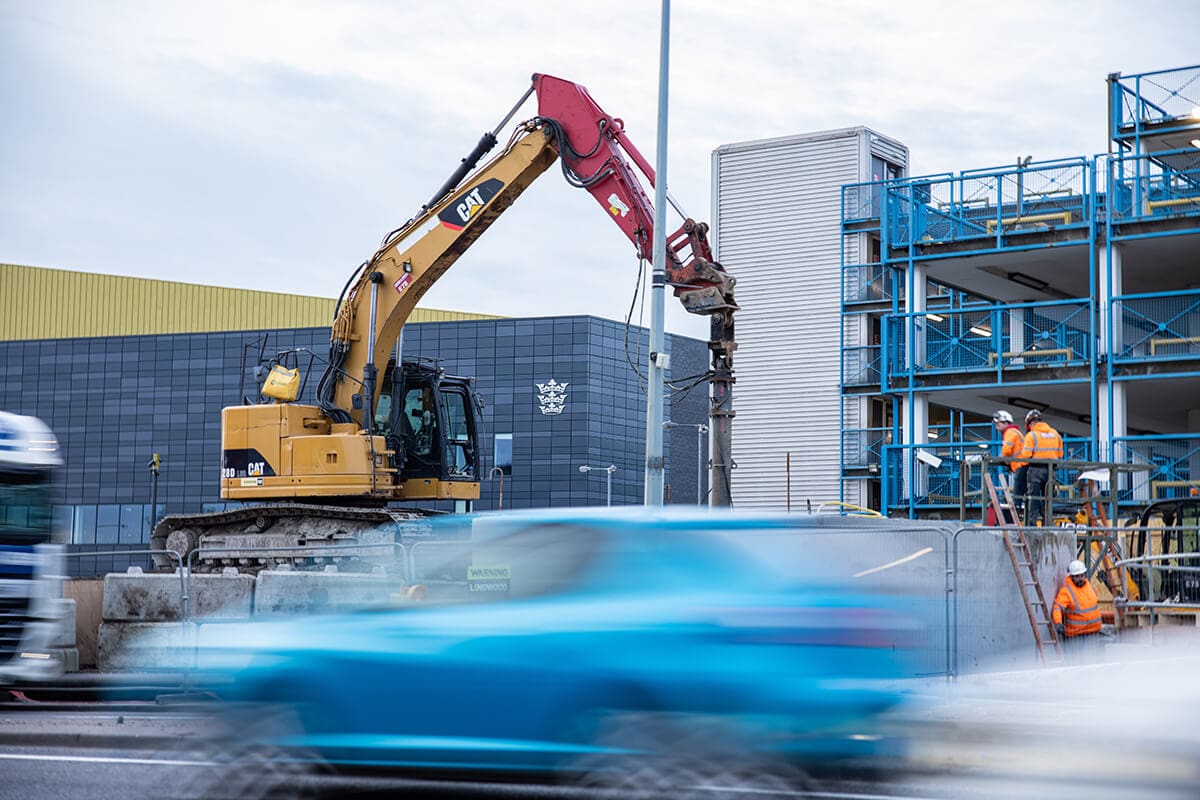
You cannot just bring in an excavator and start knocking a house down. In NSW, demolishing a residential property requires formal approval before any work begins. The type of approval depends on the property, the location, the council, and what you plan to build afterward.
Getting this wrong is expensive. Starting demolition without the correct approval can result in stop-work orders, fines, mandatory site remediation, and in some cases, a requirement to rebuild what you knocked down. It can also invalidate your insurance and create complications with your builder, certifier, and lender.
This guide covers the two main approval pathways for house demolition in NSW, the additional permits and reports you will need, and the steps to follow so your project starts on the right side of the law.
The Two Main Approval Pathways
In NSW, house demolition can be approved through one of two pathways: a complying development certificate (CDC) or a development application (DA). The pathway that applies to your project depends on the property’s zoning, heritage status, environmental constraints, and what you intend to do with the site.
Complying Development Certificate (CDC)
A CDC is the faster and simpler option. It is assessed by an accredited private certifier (also called a principal certifying authority) against the State Environmental Planning Policy (Exempt and Complying Development Codes) 2008. If your property and proposed work meet the criteria set out in the policy, the certifier can approve the demolition without it going through the council’s assessment process.
CDCs are typically issued within days to a couple of weeks, compared to weeks or months for a DA.
To qualify for a CDC, the property generally must not be listed as a heritage item or located in a heritage conservation area. The property must not be in certain environmental zones (flood-prone land, coastal hazard areas, environmentally sensitive land). The proposed demolition must comply with setback, access, and safety requirements. The demolition must not affect a building that is subject to an interim heritage order.
If your property ticks all the boxes, a CDC is the preferred pathway. It is faster, cheaper, and more predictable.
Development Application (DA)
If your property does not qualify for a CDC, you will need to lodge a DA with your local council. This is a more involved process that includes lodging the application with supporting documents and fees, council assessment (which may include referral to internal departments and external agencies), neighbour notification (for some councils, this includes a public exhibition period), and assessment against the council’s local environmental plan and development control plan.
DAs for demolition in established suburbs across Southern Sydney typically go through councils like Georges River Council, Bayside Council, Sutherland Shire Council, or Canterbury-Bankstown Council. Each has its own processing times and requirements.
A DA can take anywhere from several weeks to several months, depending on the complexity of the application and whether any objections or additional information requests arise.
When a DA Is Required
Common triggers that push a project from CDC to DA include heritage listing or location in a heritage conservation area, the presence of significant trees that may need removal, flood-prone land classification, proximity to a watercourse or environmentally sensitive area, non-standard zoning, and situations where the demolition is part of a larger development that requires DA assessment (such as a subdivision or multi-dwelling project).
If you are not sure which pathway applies, your certifier or a local planning consultant can advise you based on the property’s planning controls.
Additional Permits and Reports
Beyond the CDC or DA, several other permits and reports are typically required before demolition can proceed.
Asbestos Assessment
If the house was built before 1990, an asbestos survey is required. This identifies whether asbestos-containing materials are present and what type they are (bonded or friable). The survey informs the asbestos removal scope and is typically a condition of the approval.
All asbestos must be removed by a licensed contractor before general demolition begins. The removal must comply with SafeWork NSW requirements, and a clearance certificate must be issued before the site is handed over for demolition.
Utility Disconnection
All services must be disconnected before demolition starts. This includes electricity (through the local network provider, typically Ausgrid or Endeavour Energy), gas (through the gas distributor), water and sewer (through Sydney Water), and telecommunications (through the relevant provider).
Each disconnection has its own application process and lead time. Some can take several weeks, so start the applications early. Your demolition contractor can advise on the typical timeframes.
Dial Before You Dig
Before any excavation or demolition, a Dial Before You Dig (DBYD) request must be submitted. This returns plans showing the locations of underground services (power, gas, water, sewer, telecommunications) on and near your property. This information is used to plan the demolition safely and avoid damaging live services.
Work Zone and Road Occupancy Permits
If the demolition requires temporary use of the footpath, nature strip, or road for equipment, skip bins, or truck access, you may need a work zone permit or road occupancy licence from the council or the relevant roads authority. This is common in tighter suburbs where site access is limited.
Tree Removal Permits
If trees on the property need to be removed as part of the demolition, a separate tree removal permit may be required from the council. Many councils have tree preservation orders that protect trees above a certain size. Removing a protected tree without approval can result in significant fines.
Demolition Work Plan
A demolition work plan is prepared by the demolition contractor and outlines how the work will be carried out safely. It covers the sequence of demolition, the equipment to be used, safety measures, waste management, traffic management, and asbestos handling procedures. This plan is a requirement under the Work Health and Safety Regulation 2017 (NSW).
Structural Engineer’s Report
In some cases, a structural engineer’s report is required to confirm that the demolition will not affect the structural integrity of neighbouring buildings, shared walls, or retaining structures. This is common for semi-detached homes, properties with shared boundary walls, and sites with retaining walls or below-ground structures.
The Approval Process Step by Step
Here is the typical sequence for a straightforward house demolition in Sydney.
Step 1: Engage your demolition contractor. A professional demolition company will assess the property, identify any constraints, and advise on the approval pathway. Many contractors handle the approval process on your behalf or work closely with your certifier.
Step 2: Commission an asbestos survey. Get the property tested for asbestos before you apply for approval. The survey results will be needed for your application and will inform the removal scope and cost.
Step 3: Apply for your CDC or DA. Lodge the application with the required supporting documents. For a CDC, this is typically done through a private certifier. For a DA, it goes to the council.
Step 4: Arrange services disconnection. Submit disconnection requests to each utility provider. Allow sufficient lead time for each.
Step 5: Submit a Dial Before You Dig request. Obtain plans of underground services and share them with your demolition contractor.
Step 6: Obtain any additional permits. Tree removal, work zone permits, and road occupancy licences as required.
Step 7: Complete asbestos removal. Before general demolition can start, all asbestos must be removed and a clearance certificate issued.
Step 8: Demolition begins. With all approvals in place, services disconnected, and asbestos cleared, the demolition can proceed.
Step 9: Site clearance and certification. After demolition, the site is cleared and any conditions of approval (such as soil testing, stormwater management, or hoarding removal) are completed. A final inspection by the certifier may be required.
Common Pitfalls
Starting without approval. This is the most expensive mistake. Even if you have a builder waiting and a tight timeline, starting demolition without a valid CDC or DA consent is illegal and can result in prosecution, fines, and remediation orders.
Underestimating lead times. Services disconnection and council processing take time. Build at least four to six weeks of lead time into your project plan before the expected demolition start date. More if a DA is required.
Forgetting about neighbour notification. If your DA process includes neighbour notification, plan for it. Address any concerns early. A neighbour objection can delay your application significantly if not managed proactively.
Ignoring council conditions. When your approval is issued, read the conditions carefully. They may include requirements for hoarding, dust suppression, work hours, noise limits, and post-demolition site management. Non-compliance can result in fines or stop-work orders.
Getting It Right From the Start
The approval process for house demolition in NSW is not complicated, but it does require planning. Each step has a lead time, and missing one can delay the entire project.
The easiest way to manage it is to work with a demolition contractor who understands the process and can guide you through it, or handle it on your behalf. That way, you know the approvals are in order before the first machine arrives on site.
If you are planning a demolition and want help with the approvals, asbestos assessment, and full project coordination, get in touch with our team. We will walk you through the process and make sure nothing gets missed.